English
  中文简体
中文简体  Español
  русский
  Deutsch
What Is Pushing Side-Impact Protection Forward
The shift toward side-impact protection in infant car seats is being driven by a combination of updated crash-test standards, real-world collision data showing that side collisions carry a higher risk of head and chest injury than once assumed, and steady progress in impact-absorbing materials that allow manufacturers to add protective structure without making seats bulky or difficult to install. Regulators in multiple regions have introduced or tightened side-impact testing protocols over the past decade, and that regulatory pressure has pushed engineering teams to treat lateral protection as a core design requirement rather than an optional feature.
Side collisions account for a meaningful share of serious injuries among young children in vehicle crashes, partly because there is less structural distance between the vehicle door and a child's head compared to the crumple zones available in frontal impacts. This physical reality has shaped how infant seats are engineered, with deeper side walls, energy-absorbing foam layers, and reinforced headrest structures becoming standard features across a growing share of the market rather than premium add-ons.
Crash Data Behind the Design Shift
Traffic safety research consistently points to side-impact crashes as a category where occupant protection has historically lagged behind frontal crash performance. Vehicle-to-vehicle side collisions and single-vehicle crashes into fixed objects both expose occupants, including infants in rear-facing seats, to forces that push the body sideways with limited crumple zone to absorb the energy. Analysis of crash outcomes has shown that head injuries in particular are more likely when a side impact occurs near the occupant's seating position, which is a central reason testing agencies began developing dedicated side-impact protocols rather than relying solely on frontal and rollover criteria.
This body of evidence has given engineers a clearer target: reduce the forces transmitted to a child's head and torso during a lateral collision by managing energy absorption at the point of contact rather than relying on the vehicle structure alone. That shift in thinking is reflected in how infant seat shells, foam padding, and headrest wings are now designed as an integrated system rather than separate components added after the main structure is finalized.
Testing Standards That Shaped the Industry Response
Several testing bodies have introduced side-impact assessments that manufacturers now design toward from the earliest stages of product development. These programs differ in methodology and scoring, but they share a common goal of measuring how well a seat limits head contact and chest compression when a simulated vehicle door intrudes into the occupant space.
| Testing Framework | Primary Focus | Measured Outcome |
|---|---|---|
| European consumer crash programs | Simulated door intrusion into occupant space | Head and chest contact forces |
| United States federal motor vehicle safety standards | Lateral sled testing with instrumented dummies | Head injury criteria and rib deflection |
| Regional compulsory certification schemes | Structural integrity under lateral load | Shell deformation and harness retention |
Because these frameworks vary by region, manufacturers selling across multiple markets typically design shells and padding systems to satisfy the more demanding requirements among them, which has the practical effect of raising baseline protection levels even in regions where side-impact testing is not yet mandatory.
Engineering Approaches to Lateral Protection
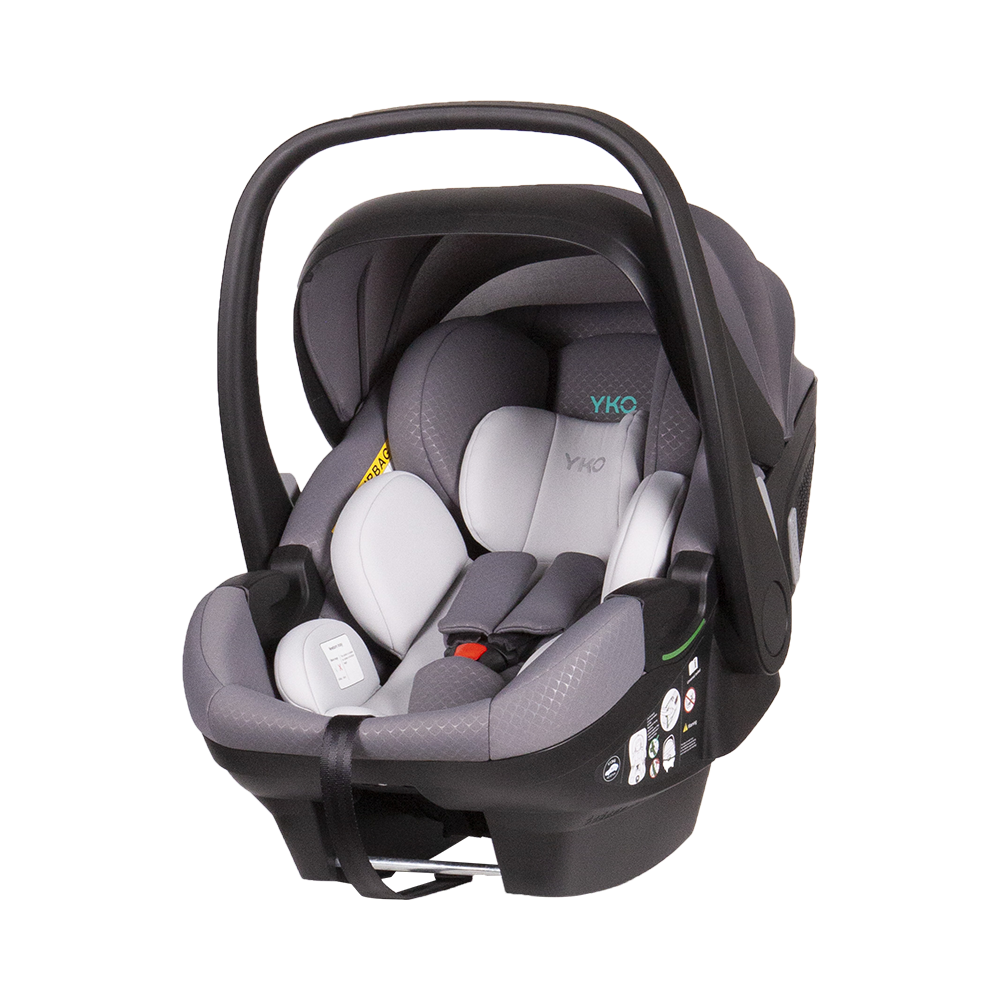
Several engineering techniques recur across infant seats built with side-impact protection as a design priority. Deep side walls extend beyond the child's head and shoulders, creating a physical barrier before contact reaches the vehicle interior. Energy-absorbing foam, often a layered polystyrene or polyurethane composite, is placed within these side walls to compress under impact and dissipate force before it reaches the child. Some designs incorporate a headrest that shifts or rotates slightly on impact, spreading load across a wider area of foam rather than concentrating it at a single contact point.
Shell Geometry and Structural Reinforcement
The outer shell plays a supporting role alongside the foam padding, distributing impact energy across the structure rather than allowing it to concentrate near the harness anchor points. Shells molded from high-strength polypropylene are common because the material combines rigidity with a degree of controlled flex, allowing the shell to absorb and redirect energy during a collision without shattering. Reinforcing ribs along the side panels add stiffness precisely where lateral loads are expected to concentrate, which helps maintain the shape of the occupant space during an impact event.
Materials and Harness Systems Supporting Protection
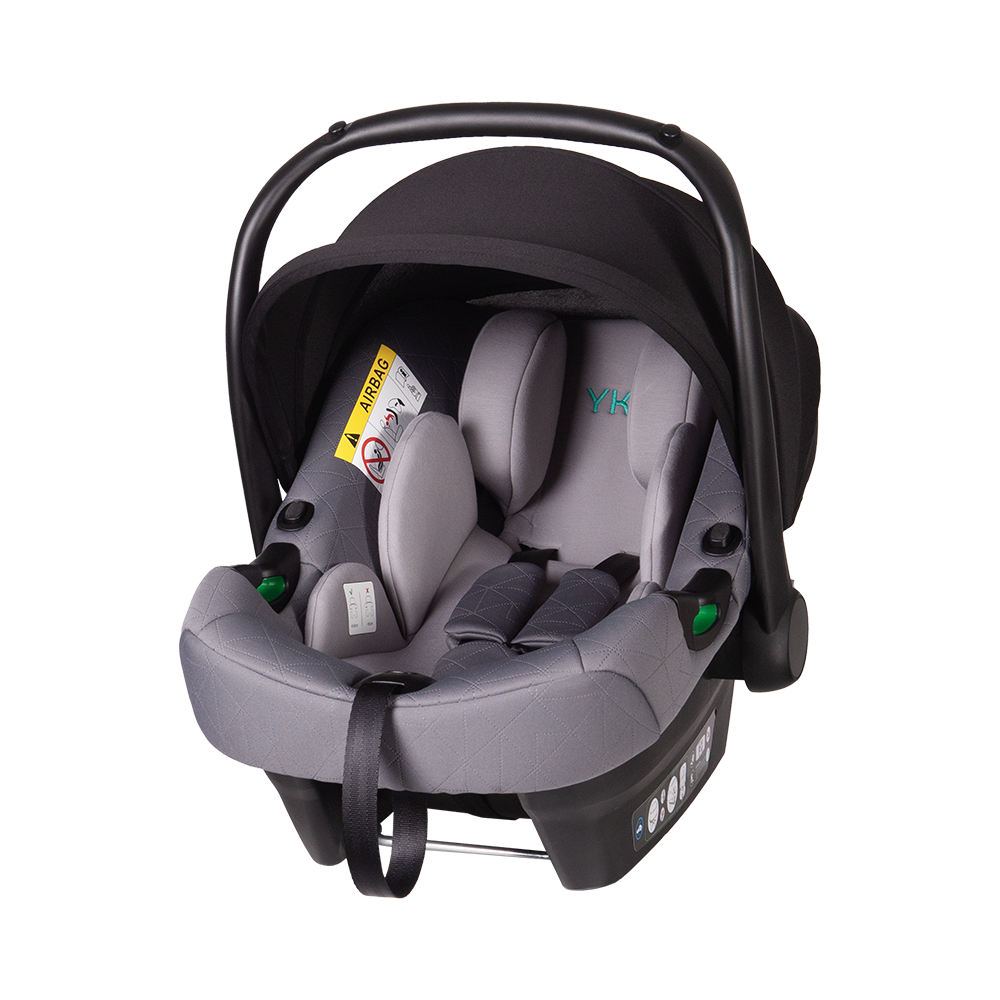
Infant car seats designed for newborns through roughly fifteen months, typically covering a height range of 40 to 87cm and a weight range up to 13kg, combine structural materials with a restraint system calibrated for a developing body. The shell in many current models is crafted from injection-molded polypropylene, chosen for its favorable strength-to-weight ratio and its consistent performance across a range of temperatures encountered in daily vehicle use. This material choice supports the deep side-wall geometry needed for lateral protection while keeping the overall seat light enough for parents to carry between a vehicle and a stroller frame.
Restraint hardware is engineered alongside the shell rather than treated as a separate system. Three-point and five-point harness configurations distribute crash forces across the shoulders and hips, and when paired with side-impact-rated shell geometry, the harness helps keep the torso aligned within the protected zone of the seat during a lateral event. The interior lining, usually a soft and breathable fabric selected for its gentle contact with sensitive newborn skin, sits over the energy-absorbing foam layer without interfering with its compression characteristics, so comfort features and protective structure work together rather than competing for space.
Comfort Features That Accompany Structural Design
Protective engineering has developed alongside features aimed at day-to-day usability, since a seat that is uncomfortable or inconvenient is less likely to be used correctly on every trip. Detachable and washable cushions allow caregivers to keep the interior clean without disturbing the underlying foam structure, and sun canopies extend to shield an infant's face during outdoor use without adding weight to the sides of the shell where impact protection is concentrated. Carry handles, positioned to balance the seat's weight when lifted with a sleeping infant inside, are shaped so they do not interfere with the shell's side-wall profile.
The ergonomic shaping found in many current models supports the head, neck, and spine in a position that keeps the airway open and reduces strain during longer trips, a consideration that works alongside crash protection rather than separately from it, since a well-supported resting posture also keeps the child properly positioned relative to the harness and side padding.
Common Use Cases Across Daily and Travel Settings
Infant seats built with side-impact protection appear across a range of everyday scenarios beyond routine commuting. Families traveling by rideshare or taxi services use portable infant seats that transfer easily between vehicles while retaining the same protective shell and harness system. Households that combine a car seat with a compatible stroller frame rely on the detachable base and carry handle to move a sleeping infant without waking them, a routine that depends on the seat maintaining its structural integrity through repeated attachment and removal cycles. Outdoor family outings make regular use of the sun canopy and washable cushion set, since exposure to sunlight and food spills is common during longer excursions.
- Daily commuting between home, childcare, and work locations
- Rideshare and taxi travel requiring a portable, easily transferable seat
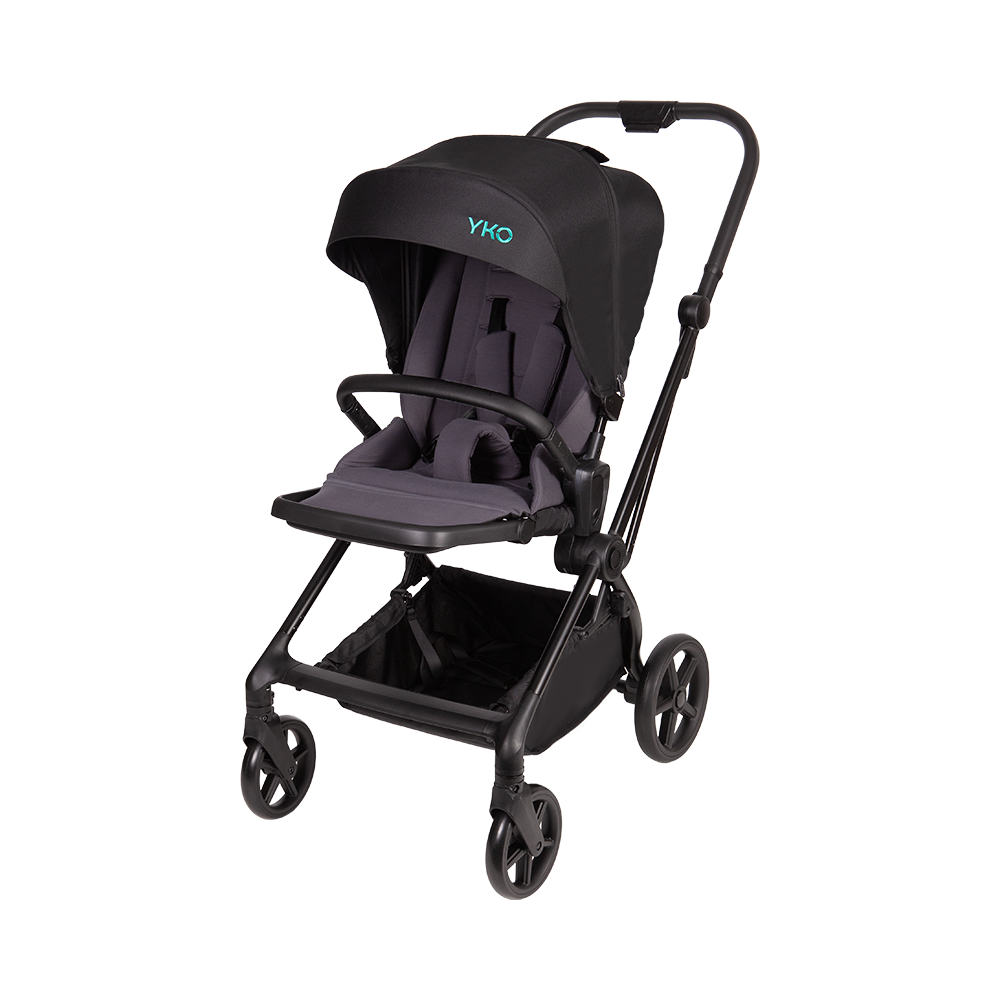
- Combined stroller and car seat travel systems for errands and outings
- Longer road trips where prolonged seating time increases the value of ergonomic support
What to Check When Evaluating a Seat's Side Protection
Caregivers assessing side-impact protection can look for a few identifiable features rather than relying on marketing claims alone. The depth of the side walls relative to an infant's head is a visible indicator, along with the presence of a distinct foam layer visible or described within the side panels rather than a single thin layer of padding. Harness anchor points should sit at a height appropriate for the child's shoulders as they grow within the seat's rated range, since a poorly positioned harness can reduce the benefit of even a well-engineered shell. Checking whether a seat has been evaluated under a recognized side-impact testing protocol, and confirming the shell material and construction method through product documentation, gives a more concrete basis for comparison than general descriptions of safety performance.