English
  中文简体
中文简体  Español
  русский
  Deutsch
The difference between a calm airport morning and a stressful one is often about 12 pounds of car seat. That is roughly the gap between a standard everyday convertible and a genuinely travel-oriented model, and you feel every pound while hauling luggage to a connecting gate. If you are shopping for a portable car seat for travel, here is the short version: choose a lightweight certified seat that still matches your child's stage and your transport plan — a belt-installing infant carrier under 10 pounds for babies, a compact convertible around 10 to 12 pounds for toddlers, or a slim booster for school-age kids — and confirm at home that you can install it with a seat belt alone in about two minutes. Everything below explains how to reach that decision with confidence.
What "Portable" Actually Means in Numbers
Portability is not a feeling; it is four measurable things. Weight is the obvious one: everyday convertible seats commonly run 15 to 25 pounds, while travel-focused convertibles drop to roughly 10 to 12 pounds, infant carriers typically sit between 7 and 10 pounds, and backless boosters can be as light as 4 pounds. Footprint matters just as much once you board a plane, because many economy seats are only about 16 to 17 inches (41 to 43 cm) wide between the armrests. Installation speed decides whether a taxi ride starts smoothly or becomes a curbside wrestling match, and the carrying design — a shoulder strap, a well-balanced handle, or compatibility with a travel cart — decides how the seat moves between the terminal door and the gate.
- Weight targets: under 10 pounds for an infant carrier, 10 to 12 pounds for a travel convertible, under 6 pounds for a backless booster.
- Width targets: a base at or under about 17 inches to fit aircraft seats and narrow rental cars.
- Install time: two to three minutes with a seat belt alone, no base, no LATCH required.
- Carrying: strap or handle positions that keep your hands free for tickets and kids.
The table below sums up how the main seat categories compare for travel use.
| Seat type | Typical travel weight | Child range | Where it shines | Main trade-off |
|---|---|---|---|---|
| Infant carrier | 7-10 lb | Birth to roughly 30-35 lb | Quick taxi rides, gate-to-gate carrying, clicking into strollers | Outgrown within about the first year |
| Compact convertible | 10-17 lb | Rear-facing from birth, then forward-facing to 40-65 lb | One seat for the entire trip and for years afterward | Fewer comfort extras; bulkier than a carrier |
| Combination harness-to-booster | 12-20 lb | Toddler through school age | Frequent travelers who want one long-life seat | Heavier than a dedicated booster |
| High-back / backless booster | 4-10 lb | Roughly 40 lb and up | Packing light, rental cars, older kids | Not usable during the flight itself |
Matching the Seat to Your Child's Stage
Infants: the carrier and the base question
Infant carriers are built to click into a base, and that base is the first thing to leave at home when you travel. Rental cars and taxis almost never have your base, so the skill that matters is a solid belt-only installation. Weight is the other deciding factor: every extra pound in the shell is a pound you carry through terminals, which is why a purpose-built lightweight infant car seat is usually worth a small trade in padding or extras. Watch the growth limits too — many carriers top out around 30 to 35 pounds, or when your baby's head sits within an inch of the top of the shell, so check where your child sits on that curve before booking a big trip.
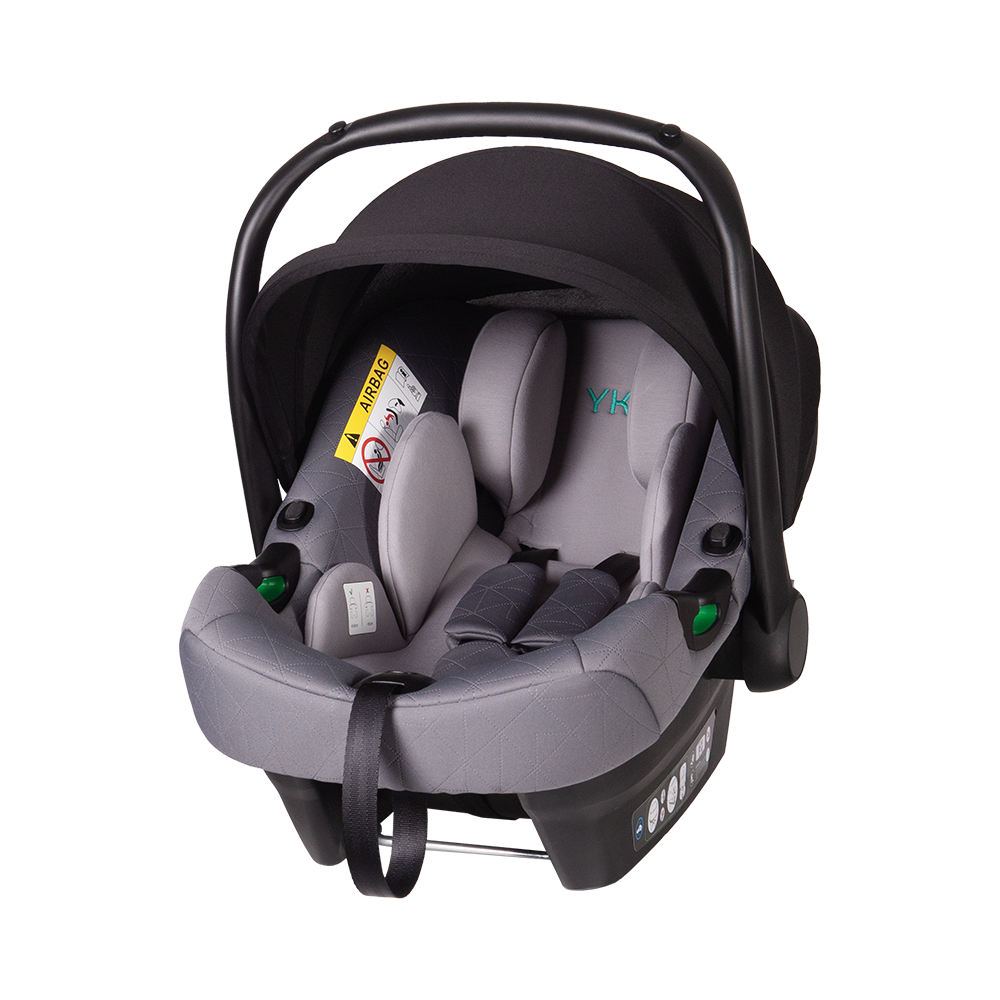
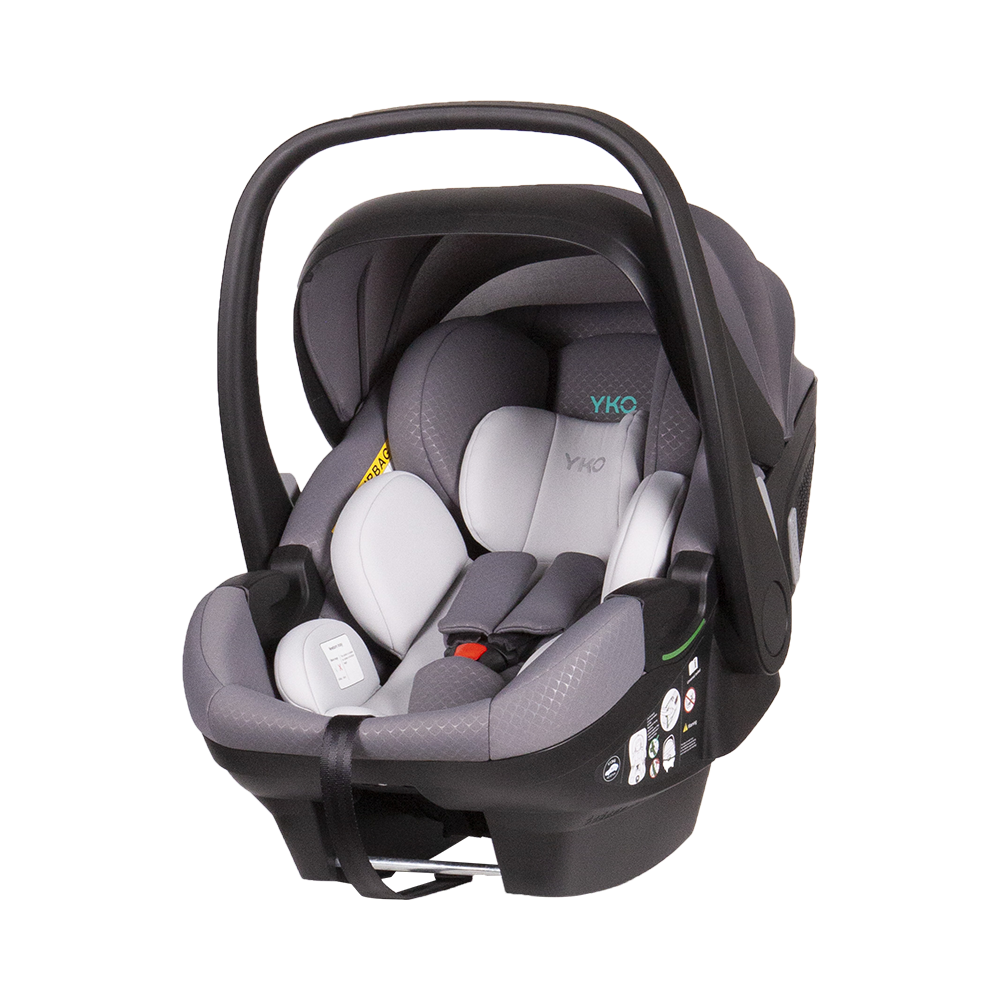
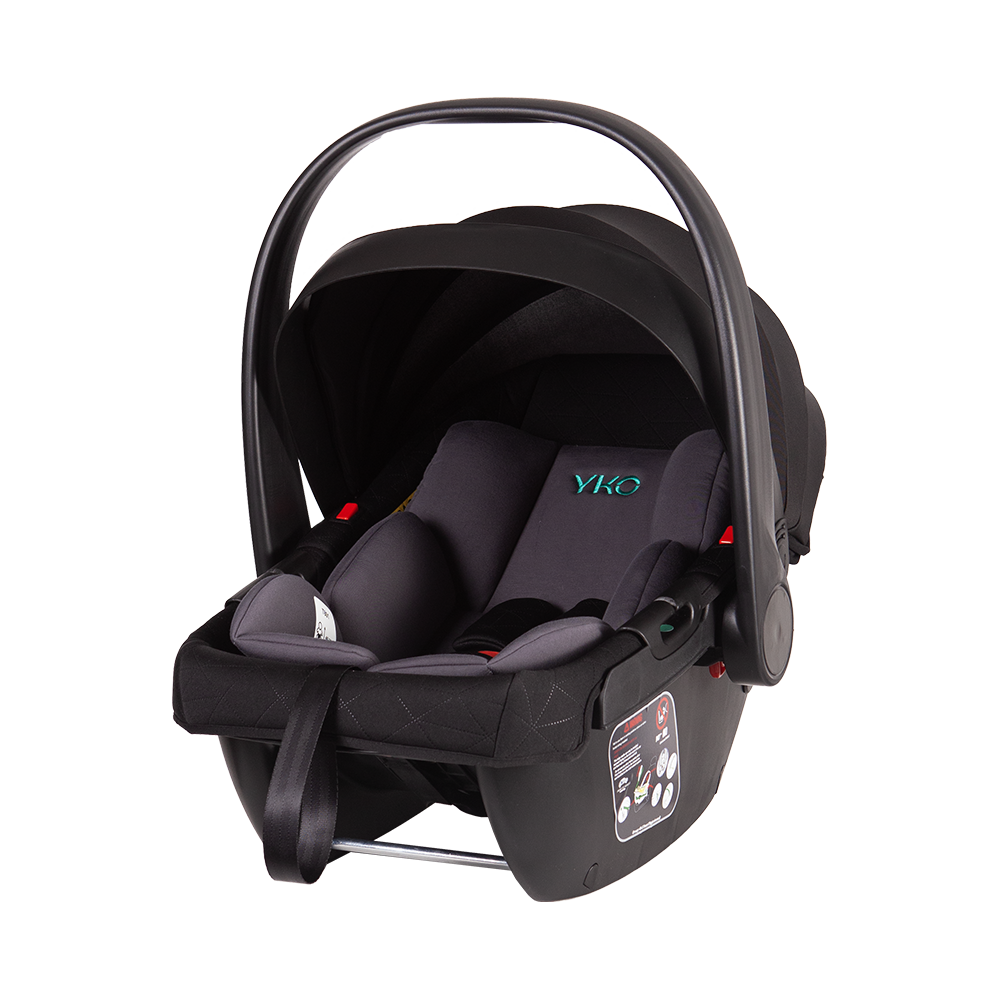 Lightweight Infant Car Seat with Large CanopyA 3.1 kg rear-facing i-Size infant carrier for babies 40–87 cm, with EPP shell and stroller compatibility. Its low weight and belt-only installation make it practical for travel where bases are unavailable.View Product →
Toddlers: convertibles earn their bulk
From roughly the first birthday onward, a convertible seat becomes the more economical travel companion because it works rear-facing first and forward-facing later, often up to 40 to 65 pounds. If you are weighing the two categories against each other, it helps to read how convertible seats and infant carriers differ before committing. For flying, confirm the seat permits rear-facing installation on aircraft if your toddler is still in that stage, and check that the harness adjusts without rethreading, because a mid-trip growth spurt should not become a fitting problem. A dedicated convertible rear-facing toddler car seat with a narrow shell is a strong fit for tight cabins and compact rentals.
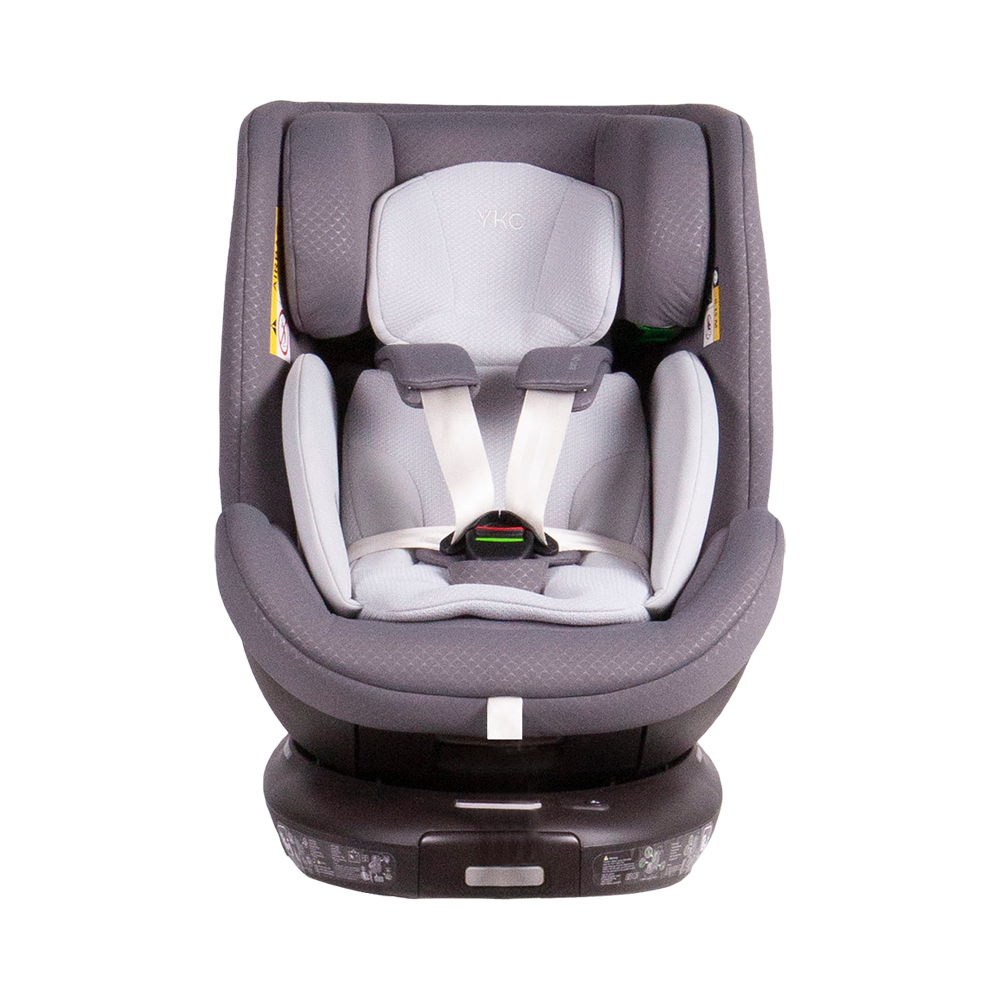
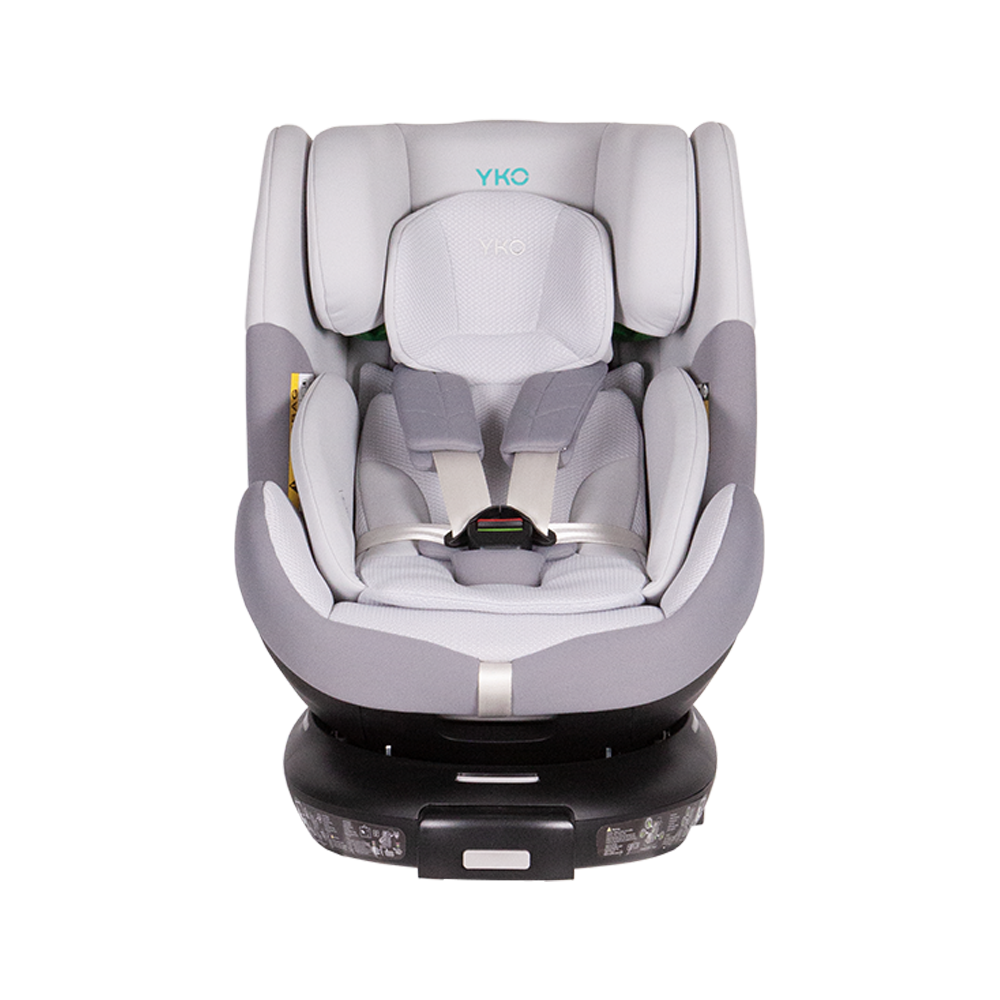
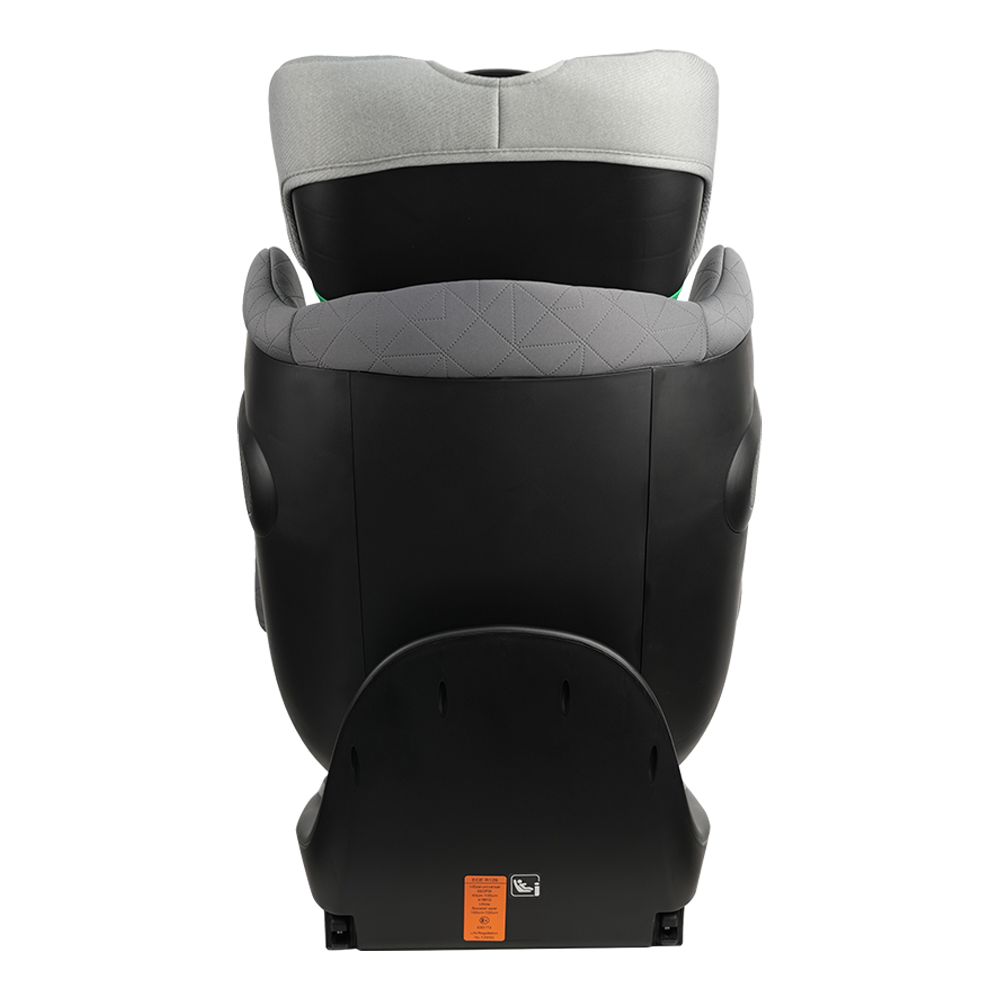 360° Rotation Convertible Toddler Car SeatRear- and forward-facing seat for children 40–135 cm with one-click ISOFIX, 10-position headrest, and stowable support leg. The adjustable fit suits toddlers on the move, and a narrow shell helps in compact rental cars.View Product →
School-age kids: boosters that pack down small
Once a child is at least four years old and typically around 40 pounds (18 kg) or 100 to 105 cm tall, a booster covers the remaining years of car travel with minimal luggage hassle. A high-back convertible booster seat keeps head and side support for napping on long drives and then converts as your child grows, while a backless model slips into a large suitcase or a backpack. Keep the aircraft rule in the next section in mind, though: boosters travel in the hold, not in the cabin.
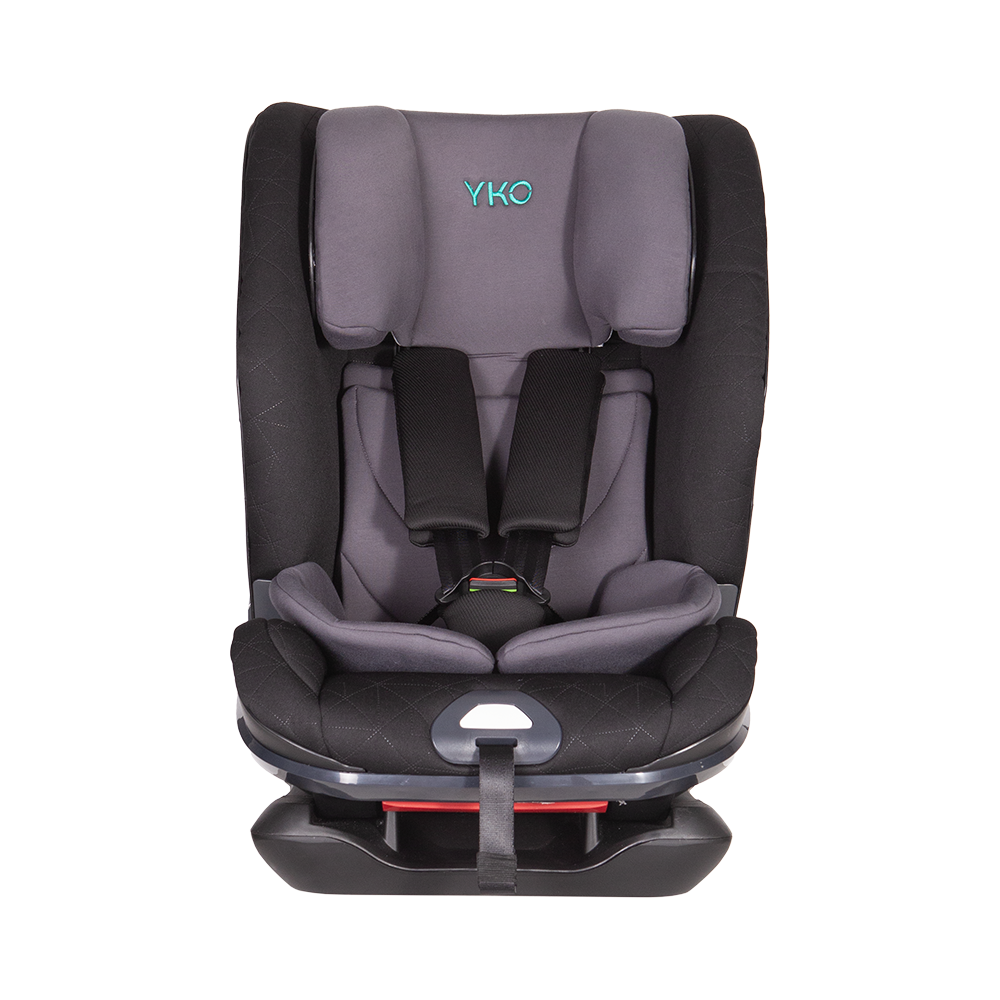
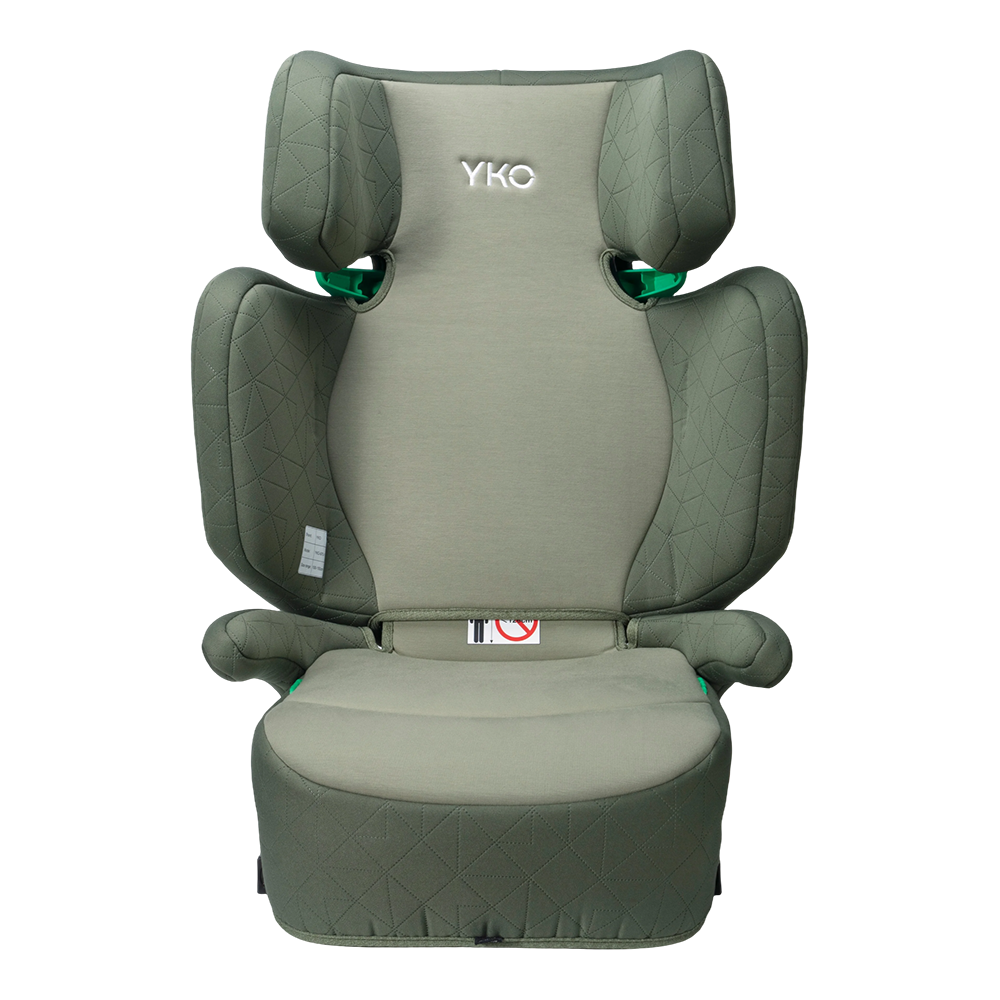 High-Back Convertible Booster Seat with Detachable BackrestECE R129 booster for children 100–150 cm, converting from high-back to backless with a 9-position headrest and ISOFIX or 3-point belt installation. Lightweight and adaptable, it covers the final years of car travel with minimal bulk.View Product →
Flying With a Car Seat: Certification, Cabin Fit, and the Booster Rule
Buying a child's own airline seat and bringing an approved restraint is a safe way to fly with a young child, and aviation authorities recommend it. In the United States, look for a label on the seat stating it is certified for use in motor vehicles and aircraft, or the equivalent approval for your departure country; many harnessed seats carry it, while belt-positioning boosters do not, because they need a lap-and-shoulder belt to work and airplane seats only have lap belts. Cabin placement follows crew instructions, with window seats the usual requirement so the seat cannot block other passengers in an emergency. Width is the practical gatekeeper: with economy seats about 16 to 17 inches across, a narrow-base seat fits far more reliably, so check the base width in the specifications before you book. Finally, decide how the seat moves through the airport — carrying it on protects it from rough handling, gate-checking frees your hands, and checking it through risks damage, so inspect for cracks after any flight where the seat traveled in the hold.
Installation Practice, Local Laws, and the Rental Question
A travel seat is only portable if you can install it without help, so rehearse the belt path at home until you can do it blind — two to three minutes is a realistic target. LATCH anchors are not universal, especially in taxis and older rentals, which is exactly why belt-only capability is a key requirement for a travel seat. Laws also shift at the border: European markets follow UN R129, which is height-based and requires rear-facing travel until at least 15 months, while many other regions use weight-based rules, so check your destination before deciding what to pack. The alternative — renting or borrowing a seat on arrival — removes the airport haul but leaves you with unknown history, unknown harness wear, and often an unfamiliar installation, which is a bigger risk than many families expect.
How Manufacturers Engineer a Seat to Travel Well
Weight savings do not come from removing safety features; they come from engineering decisions made long before the seat reaches a catalog. Lightweight shell materials, narrower bases, one-pull harness height adjustment, clearly color-coded belt paths, and washable covers are the details that separate a pleasant travel seat from a frustrating one — and every one of them must survive the same crash, side-impact, and durability testing as a full-size model. Balancing weight targets against certification is the core work of specialized manufacturers such as Zhenjiang YKO Child Product Co., Ltd., which has developed and manufactured child car seats and strollers since 2009, supplies brands through OEM and ODM programs across Europe, Asia, and South America, and states that its products meet European safety and sustainability requirements, including recyclable materials and modular designs that extend product life.
Weigh the decision in this order: certification for every transport mode on your itinerary, correct fit for your child's current stage, a belt-only installation you can repeat in minutes, and only then the weight number. Families who follow that sequence usually end up with a seat that survives years of trips instead of one that gets left behind after a single exhausting journey. Before departure day, do one final rehearsal of the install, tuck the manual into the seat's storage pocket, and take a photo of the finished installation — future you, standing in a rainy taxi line, will be grateful.