English
  中文简体
中文简体  Español
  русский
  Deutsch
Every day at departure gates, agents attach thousands of paper tags to stroller handles, and every day parents board unsure whether the stroller will come back at the aircraft door or at a baggage belt in another terminal. The answer up front: you can bring a stroller on nearly every commercial flight. Many airlines let each ticketed passenger traveling with a child check one stroller free of charge, and it does not count toward your standard baggage allowance. The decisions that shape the trip are where you hand the stroller over, whether the folded package can ride in the cabin, and whether the fold design survives the handling it receives below deck.
Three Ways a Stroller Can Fly
Airlines sort strollers into three handling paths, and knowing which path applies to your model determines the whole airport routine. A common arrangement, offered by many carriers across North America, Europe and Asia, is one free checked stroller per ticketed passenger, often with a free car seat allowed on top. Details differ: some airlines accept full-size strollers at the gate without questions, others direct oversized or non-collapsible frames to the ticket counter, and a few refuse strollers that do not fold at all. Because pickup points and tagging procedures vary, confirm the specifics on your airline's child-items page before travel day.
| Option | Where you hand it over | When it comes back | Works well for |
|---|---|---|---|
| Cabin carry-on | It stays with you and goes into the overhead bin or under the seat | You carry it off the aircraft on arrival | Compact, lightweight folds that clear carry-on size limits |
| Gate check | The gate desk or jet bridge door, right before boarding | At the aircraft door or jet bridge on arrival, depending on aircraft and airport | Full-size and travel-system strollers used through the terminal |
| Ticket-counter check | At check-in, together with your other bags | At the destination baggage belt or oversized items area | Bulkier strollers, complex connections, or trips where you do not need it landside |
Size Rules: What Actually Gets Measured
There is really only one measurement that matters, and it applies at the cabin door. If you want the stroller with you on board, the folded package has to fit in the overhead bin or under the seat in front of you, which in practice means compact and umbrella-style strollers whose folded footprint is close to a standard carry-on. Full-size strollers, travel systems and models with wide side frames travel in the hold, usually handed over at the gate. Weight is rarely an issue for a checked stroller; what airlines care about is that it folds cleanly and that no loose parts are attached.
A stroller built around a slim, flat fold can move freely between all three handling paths, and it stays practical at the destination for taxis, trains and narrow restaurant entrances. That flexibility is the point of compact travel design.
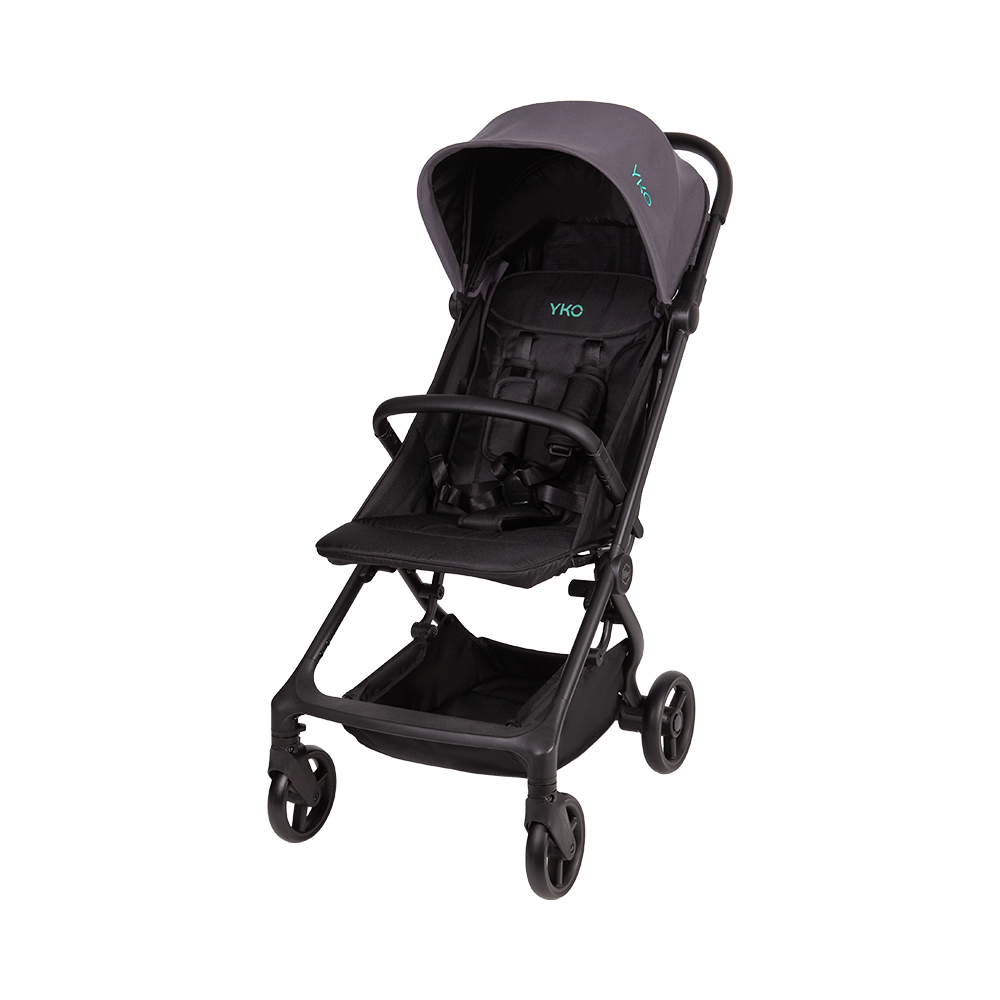
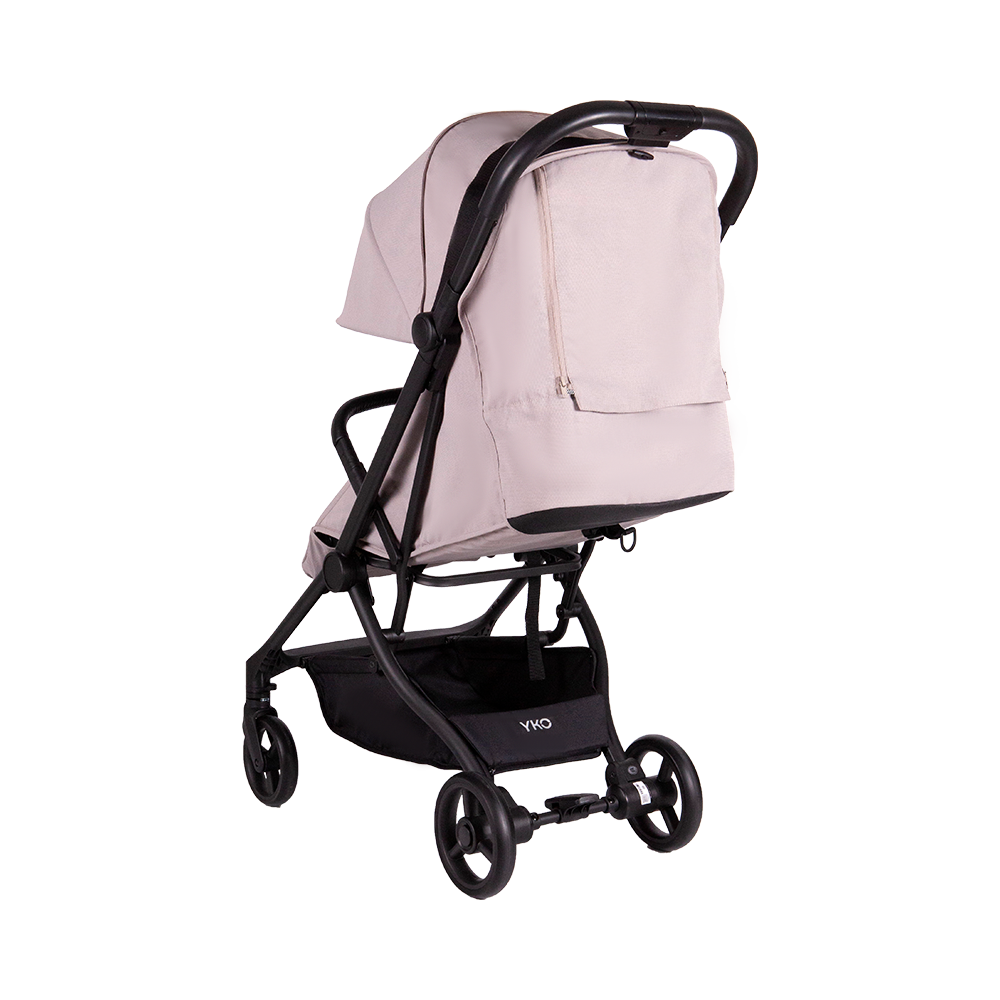 Ultra Compact Foldable Infant StrollerWith an ultra compact flat fold, adjustable backrest for newborns to 36 months, five-point harness and linked brake, this stroller suits gate checking, taxis and narrow entrances on family trips.View Product →
Gate Check, Step by Step
Gate checking is the default for many families, and many airlines board families with young children early, which buys the time to do it calmly. The sequence that works:
- Collect a gate-check tag from the gate desk when you arrive, not at final boarding call.
- Remove accessories such as cup holders, snack trays and parent organizers; loose parts snap off in the hold and rarely come back.
- Fold the stroller before you reach the jet bridge door and engage the fold lock.
- Slide it into a gate-check or padded travel bag if you own one, since fabric and canopies take the worst of the handling.
- Ask a crew member whether the stroller returns at the aircraft door on arrival or at the baggage belt, because this changes with aircraft type and airport.
- At connections, treat every leg as a new check-in and collect a fresh tag.
The Car Seat Traveling With It
Car seats follow the same rule as strollers: one per ticketed passenger, checked free and excluded from baggage allowances. If your child has a purchased seat, you can install a car seat on board instead, as long as it carries the certification label required for aircraft use, fits the seat width, and is placed at a window away from exit rows. If the child rides on your lap, the car seat goes through the same gate or counter process as the stroller.
For families carrying an infant seat through the terminal, weight decides the experience, because the seat will spend part of the journey on your forearm rather than in a vehicle.
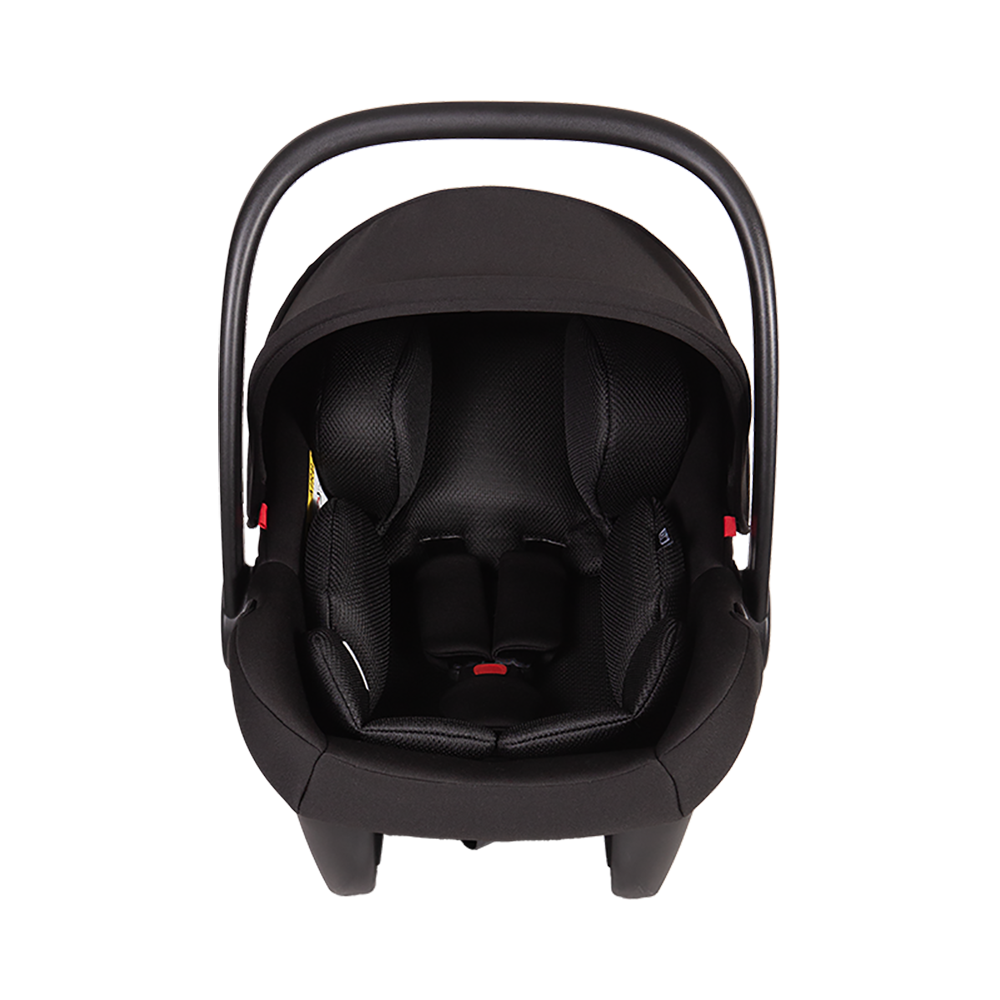 Lightweight Infant Car Seat with Large CanopyWeighing 3.6kg, this i-Size rearward-facing infant seat with seven-position headrest and large canopy is easy to carry through the terminal, making it a practical pick for traveling families.View Product →
Still deciding between an infant carrier and a convertible model before a big trip? Our comparison of convertible car seats versus infant carriers sets out where each one fits.
Security Screening With a Stroller
The stroller is screened like any other bag: it goes through the X-ray machine with the child lifted out and carried or walked through the detector by an adult. Empty the under-seat basket and seat-back pockets into a bin beforehand, because stray pouches and toys trigger manual inspections. Formula, expressed breast milk and toddler food are generally allowed in quantities beyond the standard liquid limit, though officers may open and test them, so pack them where they can be reached quickly. Adding ten to fifteen minutes to your security estimate is realistic when a stroller is in the queue.
What Makes a Stroller Genuinely Airplane-Friendly
We manufacture strollers and child car seats for brands across Europe, Asia and South America, and the questions travelers ask have shaped how we judge a stroller meant for flights. Five features separate a smooth airport experience from a stressful one:
- A one-hand fold that finishes in seconds, because one of your arms will be holding a child at the jet bridge.
- Folded dimensions that stay inside carry-on limits, keeping the cabin option open.
- A fold that locks on its own and a frame that stands when closed, so the stroller stays shut on a baggage belt or against a wall.
- An aluminum frame and lean hinge hardware, which cut the weight you carry between terminals.
- Removable, washable fabric, since airport floors and aircraft holds are rarely clean.
A fold that completes in seconds with one hand is a feature parents ask about often, because it is the difference between a calm boarding and a juggling act at the gate.
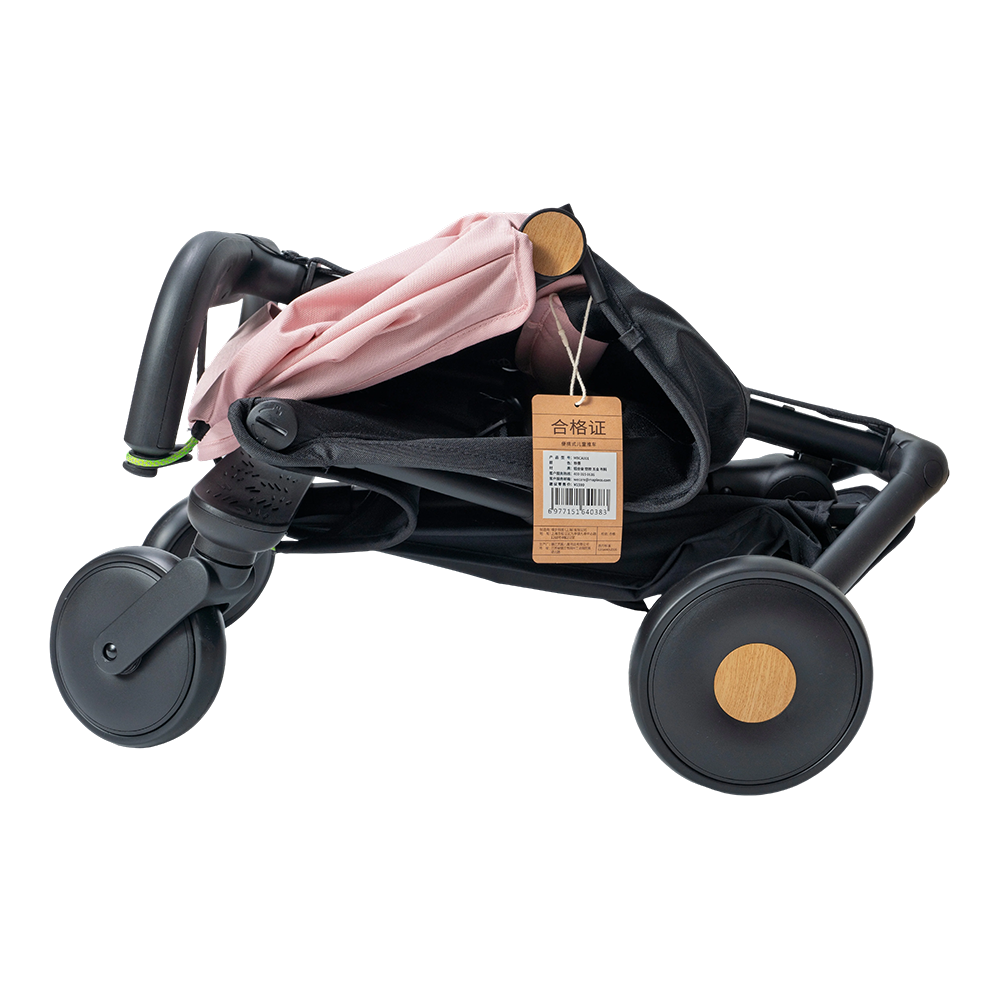 One-Hand 3-Second Foldable StrollerFolding in three seconds with one hand, this lightweight aluminum-frame stroller for 6-36 month children offers a self-standing compact fold that simplifies boarding and gate handling.View Product →
Combined with a locked, self-standing fold and a light aluminum frame, that single design decision removes much of the friction at the gate.
A Short Checklist Before You Fly
Fifteen minutes of preparation prevents many stroller problems at the airport:
- Confirm your airline's stroller and child-item policy: free allowance, gate versus counter, and whether non-collapsible frames are accepted.
- Measure the folded stroller and compare it against the airline's carry-on size if the cabin is the goal.
- Pack a gate-check or padded travel bag and keep the fold instructions in your phone.
- Label the frame with your name and phone number, and photograph the stroller folded and open to support any damage claim.
- Carry a baby carrier as a backup for jet bridges, delays and airports where the stroller returns late.
Airline rules around strollers are more generous than many parents expect: free checking, no impact on baggage allowances and a cabin option for compact folds. The friction comes from design and preparation, not from permission. Pick a stroller that folds fast, folds flat and locks shut, strip it of loose parts before boarding, and the airport becomes the calmest part of traveling with a child. If this trip is part of a broader stroller upgrade, our guide to choosing a baby stroller that fits your daily life covers the fold, storage and budget decisions in more depth.